Free delivery(excluding XL and glass transport)
Ordered before 14:00, dispatched today
Delivered from stock
Your purchase is protected with Trusted Shops 
SKU: 4522 Struisvogel Kuiken H23B13D21
The Struthio camelus, better known as the ostrich, is a fascinating animal that has intrigued humanity for centuries. This largest and heaviest bird in the world cannot fly, but makes up for this with its incredible speed and endurance. Ostriches are capable of reaching speeds of up to 70 km/h, making them one of the fastest animals on land. Their long legs and powerful muscles make them masterful runners, while their enormous eyes give them excellent vision, essential for detecting predators in the vast African savannahs where they naturally occur.
The Latin name of the ostrich, Struthio camelus, refers to their unique characteristics and behaviour. The word 'Struthio' means 'large bird', while 'camelus' emphasises the resemblance to camels, because of their long neck and ability to cover long distances in dry environments. Ostriches are not only a wonder of nature, but also a popular subject within the art of taxidermy.
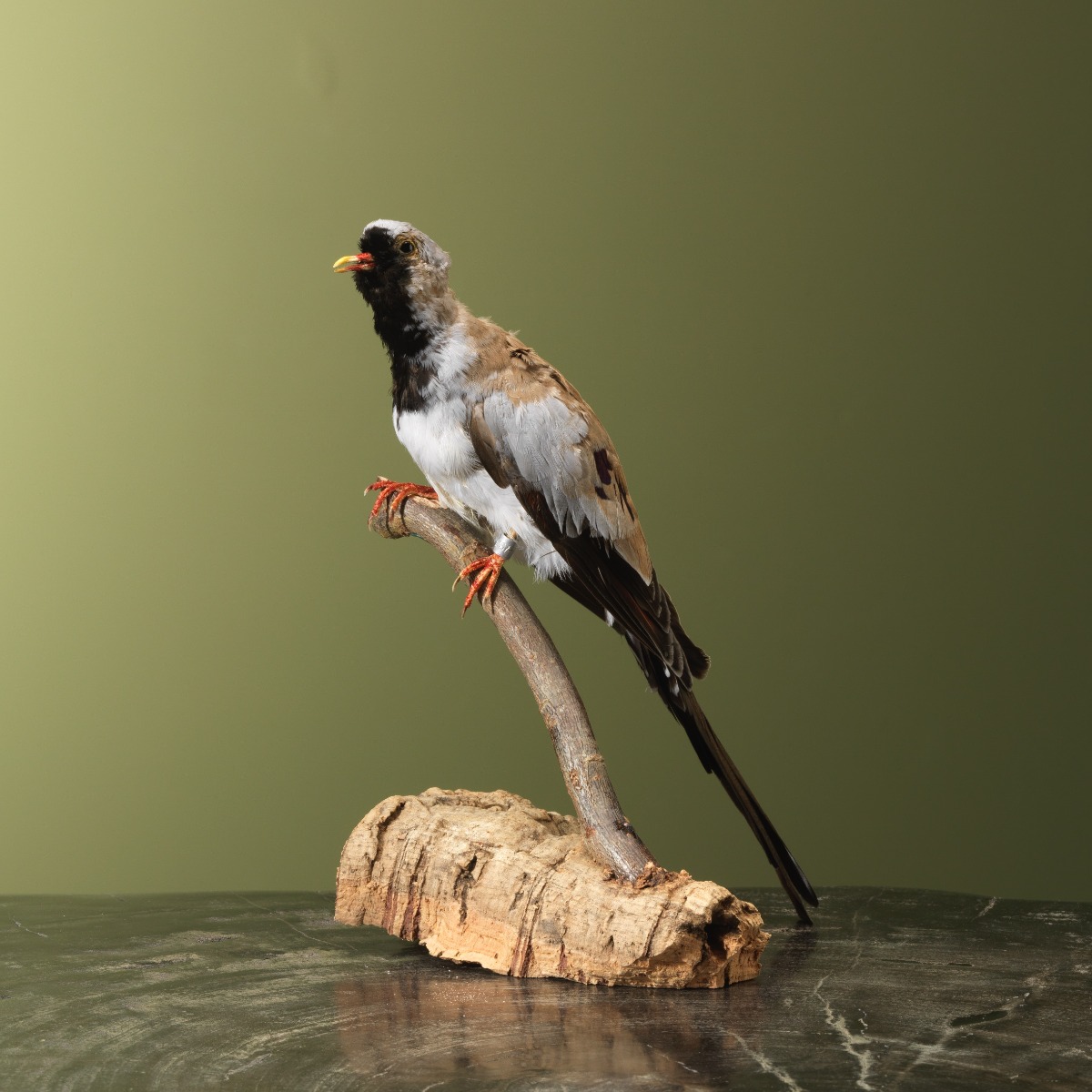
Taxidermy offers the opportunity to capture the splendour of these birds forever and share it with a wider audience. A taxidermy ostrich chick is a perfect way to appreciate the impressive details of this bird, from the delicate feathers to the expressive eyes. It allows wildlife enthusiasts to bring a piece of the African wilderness into their own surroundings.
A fun fact about the ostrich is that their eyes are larger than their brains, which helps them spot predators from far away. This remarkable adaptability makes them a successful and resilient creature in their natural habitat. The combination of speed, vision and intelligence makes the ostrich a symbol of the African plains. Whether for educational purposes or as a unique decorative piece, a taxidermy ostrich chick is a valuable addition for any collector or nature lover. Let yourself be enchanted by the beauty and complexity of the Struthio camelus, masterfully captured through the art of taxidermy.
Every mounted animal that By Max delivers is delivered with the necessary legal documents. This can be a CITES document, declaration of origin or just the invoice (this depends on the species). These documents guarantee the origin and legality of the preparation.
 EN
EN NL
NL DE
DE FR
FR