 EN
EN NL
NL DE
DE FR
FR
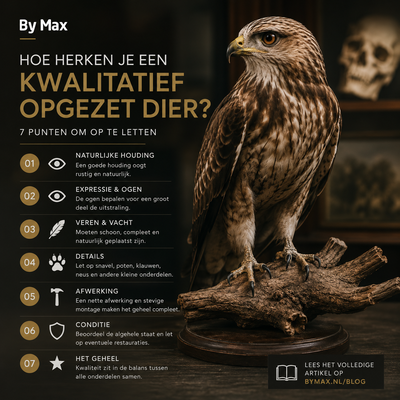
A specimen that looks beautiful at first glance is not automatically a high-quality specimen. In taxidermy, the most important differences are often found in the details. The animal's posture, anatomy, eyes, finish and the condition of the fur or feathers all determine how natural and convincing a specimen looks.
But what exactly should you look for when you want to buy a taxidermy animal? In this article, we discuss seven points that help you assess the quality of a specimen.
1. A natural posture and anatomy
A good specimen should look as though the animal could genuinely stand or sit in that position. The proportions of the body, the position of the legs, the position of the head and the posture of the tail should feel natural.
It is precisely with an unnatural posture that incorrect anatomy quickly becomes noticeable. A well-prepared animal, on the other hand, has a posture that looks calm and natural.
2. The eyes make a big difference
The eyes are perhaps one of the most important details of a specimen. They largely determine the appearance and character of an animal.
Pay attention, for example, to the position and shape of the eyes and to the way the light falls on them. In a good specimen, the eyes form a natural part of the face and do not look 'empty' or unnatural.
3. Fur and feathers should fall naturally
With mammals, a well-groomed, naturally falling coat is important. The same applies to feathers in birds. Feathers should fit neatly together and follow the natural shape of the body.
With a bird, for example, pay attention to the wings, tail and breast. Feathers that stand unnaturally or are finished carelessly can greatly affect the appearance of an otherwise beautiful specimen.
4. Look at the small details
In high-quality taxidermy, it is often the small details that make the difference. Think of the feet, claws, beak, nose, ears and other delicate parts.
These parts should match the rest of the specimen and be finished in a natural way. The better the details are executed, the more convincing the whole piece becomes.
5. The finish should be well cared for
A specimen only becomes truly convincing when all parts come together as one whole. Therefore, do not only look at the animal itself, but also at the finishing around the specimen.
With an animal on a plinth or base, for example, you should look at the attachment and the proportion between the animal and the base. Any supports or fixing points should also not unnecessarily disrupt the appearance of the specimen.
6. Condition and any restorations
Not every old specimen is of poor quality. An older specimen can in fact be particularly beautiful and valuable, especially when it has been well preserved or professionally restored.
It is therefore important to distinguish between age and quality. Look for possible damage, discolouration, insect damage and the general condition of the animal.
A good restoration can also give an older specimen a second life. At By Max, we regularly come across specimens that can be brought back into excellent condition through restoration.
Practical tip from By Max
When we assess a specimen, we do not only look at the first impression. It is precisely the details that tell you a great deal about the quality. A beautiful posture and good appearance are important, but the finishing of the eyes, feet, feathers or fur, for example, ultimately makes the difference.
7. The quality of the whole piece
Ultimately, it is not about one individual part. A high-quality specimen is a whole in which anatomy, posture, material, finish and appearance are in balance with one another.
That is also why two specimens of the same animal species can differ greatly from each other. The quality of the work, the condition of the animal and the way the specimen has been finished together determine the final result.
What should you look for when buying taxidermy?
When you buy a taxidermy animal, it is wise to look beyond just the photograph or the price. View the specimen from different angles and pay attention to the details. When buying online, it is also reassuring when you can view photographs of the actual item.
At By Max, we photograph each specimen individually. The item you see on our website is therefore the specimen you will receive. This allows you to assess properly in advance what you are buying.
Frequently asked questions
Is an old specimen automatically of lower quality?
No. Age in itself says little about quality. A well-maintained or professionally restored old specimen can still be exceptionally beautiful.
What is the best thing to look at with a taxidermy bird?
Pay particular attention to the natural posture, the position of the eyes, the fit and lay of the feathers, and the finish of the feet and beak.
Can you assess the quality of taxidermy from photographs?
Photographs give a good first impression, but not all details are visible in photographs. Multiple photographs from different angles help you assess a specimen properly.
Can a damaged specimen still be restored?
That is often possible, but it depends on the nature and extent of the damage. During restoration, the condition of the skin, fur or feathers and the construction of the specimen are assessed, among other things.
Want to know more about taxidermy?
At By Max you will find an extensive collection of taxidermy and taxidermy animals. Each specimen is photographed individually, so you can see exactly which item you are buying.
In addition to taxidermy animals, we also have a collection of skulls and other natural decoration. Would you like to know more about By Max, our way of working and our vision of taxidermy? Then also view our information about By Max.
Do you have questions about the quality, condition or restoration possibilities of a specimen? Please feel free to contact us. We will be happy to help you assess a special piece.