
 EN
EN NL
NL DE
DE FR
FR
A high-quality taxidermy bird can remain beautiful for decades. Proper care is important, but fortunately it is not complicated. At By Max, we regularly receive questions about cleaning taxidermy, the effect of sunlight and how best to protect a specimen from dust and insects. With a few simple points of attention, a specimen will remain in excellent condition for years.
The right place makes all the difference
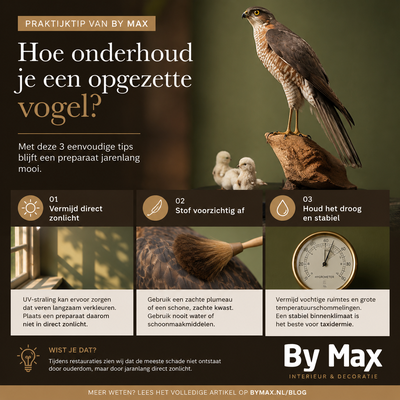
Where a taxidermy bird is placed largely determines how well it retains its appearance. For this reason, avoid direct sunlight. Prolonged exposure to UV radiation can cause feathers to slowly discolour. Birds with dark or bright colours are particularly sensitive to this.
Damp rooms are also less suitable. A bathroom, conservatory or unheated shed often has significant fluctuations in temperature and humidity. A stable indoor climate is the best environment for taxidermy.
Clean with care
Removing dust is simple, as long as it is done carefully. Use a soft feather duster or a clean brush with soft bristles and always work in the direction of the feathers. This helps prevent damage.
Never use water, cleaning products or a damp cloth. These can permanently damage the feathers and skin.
Practical tip from By Max
During restorations, we see that most damage is not caused by age, but by years of direct sunlight. A good place in the home is often more important than people think.
Check for insects occasionally
Although modern taxidermy is professionally treated, moths and other insects remain something to watch out for. Therefore, check a specimen occasionally for small signs of damage or loose feathers. By spotting problems early, any damage can often be limited.
Frequently asked questions
How often should I dust a taxidermy bird?
In a normal living space, careful dusting once a month is usually sufficient.
Can a taxidermy bird be placed in direct sunlight?
We do not recommend this. Prolonged exposure to sunlight can cause feathers to slowly discolour.
Can I hang a specimen outside?
No. Rain, moisture, temperature fluctuations and UV radiation will quickly cause a specimen to deteriorate.
How long does a taxidermy bird last?
With proper care, a high-quality specimen can remain beautiful for decades.
Can a damaged specimen be restored?
In many cases, yes. Depending on the damage, feathers can be restored, parts can be touched up or a specimen can be brought back into excellent condition.
Finally
A taxidermy bird requires little maintenance, as long as it is placed in the right location and is carefully dusted from time to time. With these simple tips, a specimen will remain an eye-catcher in the home for years.
Are you looking for a special taxidermy bird? Then take a look at our collection of taxidermy birds. Every bird on our website is unique; you will always receive the exact specimen shown in the photos.