
 EN
EN NL
NL DE
DE FR
FR
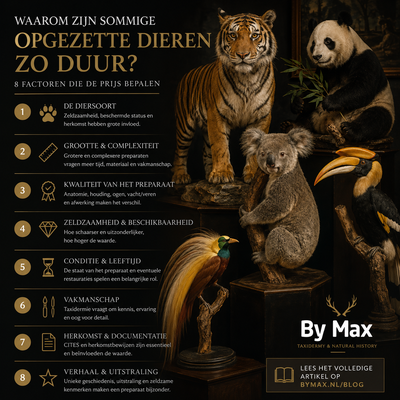
Anyone looking at taxidermy for the first time may be surprised by the price differences between different specimens. One taxidermy animal may cost a few hundred euros, while another specimen can cost thousands of euros. How can that difference be so great?
The price of a specimen is determined by far more than just the animal species. Factors such as size, rarity, quality, condition, level of difficulty and finish all play an important role. In this article, we explain which factors determine the value of taxidermy.
1. The animal species
Not every animal species is equally easy to obtain, and not every species is equally easy to prepare. This affects the final price.
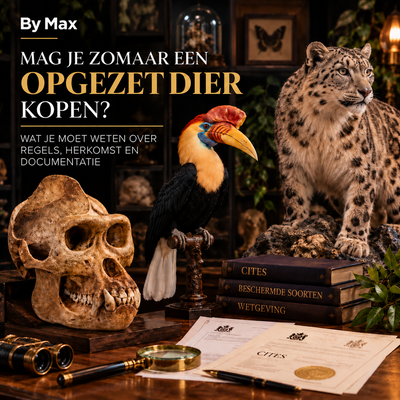
In addition, specific legal rules apply to certain animal species. For protected species, for example, CITES documentation may be required. The origin and available documentation are therefore important parts of assessing a specimen.
2. Size and complexity
A large specimen generally requires more material, time and craftsmanship than a small one. But the shape of the animal also plays a role.
A simply mounted animal cannot be compared with a complex specimen in which multiple parts have to be accurately built up and finished. The more attention a specimen requires during the process, the more this can affect its final value.
3. The quality of the specimen
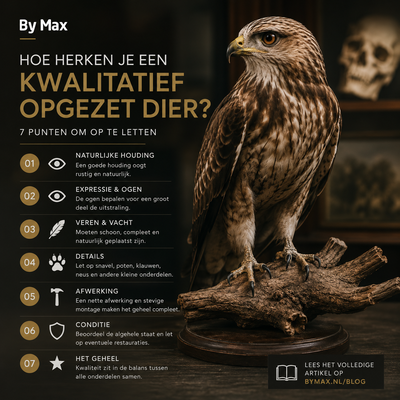
Two specimens of the same animal species can differ considerably in quality. The anatomy, posture, eyes, fur or feathers and finish together determine how natural a specimen looks.
It is often the small details that make a big difference. A high-quality finish can therefore make a specimen considerably more valuable than one where the finishing is less meticulous.
Would you like to know what to look out for yourself? Then also read our article How do you recognise a high-quality taxidermy animal?.
4. Rarity and availability
Some animals are much more common in the world of taxidermy than others. When a particular specimen is difficult to find, this can affect its value.
This is not just about the animal species. An unusually large specimen, a striking colour variant or an exceptionally beautiful finish can also be rarer than an average specimen.
5. Condition and age
The condition of a specimen is an important factor. An old specimen that has been well preserved for years can still be particularly valuable. Age therefore does not automatically mean that a specimen is worth less.
With older specimens, we look at factors including discolouration, damage, insect damage and the overall condition of the animal. A professionally carried out restoration can also bring an older specimen back into excellent condition.
Want to know more about restoration? Then also view our information about taxidermy restoration.
6. The craftsmanship behind taxidermy
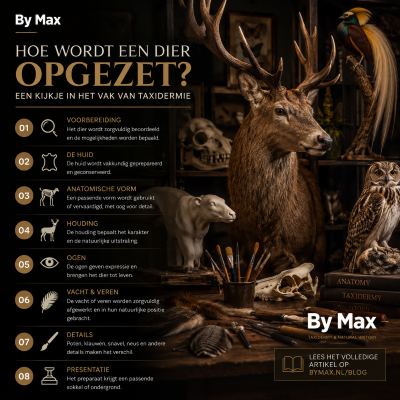
A good specimen does not happen by itself. Taxidermy requires knowledge of anatomy, materials and techniques, as well as a great eye for detail.
An animal’s posture must be natural, the proportions must be correct, and parts such as the eyes, ears, legs, claws or beak must be carefully finished. It is precisely these details that ensure a specimen looks convincing and natural.
Practical tip from By Max
When comparing two specimens, do not look only at the animal species or the size. Pay particular attention to the details. The quality of the eyes, the anatomy, the fur or feathers and the overall finish can make a big difference to both the appearance and the value of a specimen.
7. Origin and documentation
In taxidermy, a clear and verifiable origin is important. For certain protected animal species, additional legal requirements apply and CITES documentation may be necessary.
Documentation not only says something about the legal status of a specimen, but can also be important for the origin and the story behind a special piece.
Would you like to know more about CITES and the rules surrounding taxidermy? Then read our article What is CITES and why is it important in taxidermy?.
8. The story and the appearance
Some specimens have something that is difficult to express in a fixed pricing formula. A special specimen can have a strong presence, an interesting history or simply be exceptionally beautiful.
That is one of the special aspects of taxidermy. It is not just about an animal being prepared, but about preserving a piece of nature and presenting it as a unique object.
Why two similar specimens can still differ greatly in price
When comparing different specimens, it is therefore important not to look only at the size or the animal species. A small difference in quality, condition, finish or availability can cause a large difference in value.
You can compare it with art or antiques. Two objects may appear similar at first glance, but still differ greatly in quality, rarity and appeal.
In taxidermy, the craftsmanship of the taxidermist also comes into play. The way in which an animal has been built up and finished largely determines how natural the final result will be.
What should you look out for when buying taxidermy?
When buying a taxidermy animal, it is wise to look beyond the price alone. Check the quality of the specimen, pay attention to its condition and, for protected species, ask for the required documentation.
When purchasing online, it is also important that you can clearly see which specimen you are buying. At By Max, every specimen is photographed individually. The specimen you see on the website is therefore also the specimen you will receive.
This allows you to assess the posture, condition and finish yourself before making a purchase.
Frequently asked questions
Why are some taxidermy animals worth thousands of euros?
There can be several reasons for this. The animal species, size, rarity, quality, condition, finish and availability all play a role.
Is a large specimen always more expensive than a small specimen?
Not necessarily. Size is one of the factors, but quality, rarity, condition and craftsmanship also influence the value.
Is old taxidermy worth more?
Not automatically. An old specimen can be particularly valuable, but age alone does not determine its value. Condition, quality, origin and appearance are at least as important.
Does CITES affect the price of taxidermy?
Additional rules apply to certain protected animal species and documentation is required. The legal status and verifiable origin are important parts of assessing a specimen.
How do I know whether an expensive specimen is worth its price?
Do not look only at the price. Assess the quality, anatomy, posture, details, condition, finish and origin. If in doubt, a specialist can help assess a specimen.
The value of taxidermy lies in the whole
There is no simple formula with which you can calculate the value of every taxidermy animal. It is precisely the combination of animal species, quality, size, condition, rarity, craftsmanship and appearance that makes each specimen unique.
That is also what makes taxidermy so special. Every specimen has its own character and history. Ultimately, the value is not determined by one factor, but by the whole.
Curious about our collection? Then view our collection of taxidermy animals and taxidermy. Every specimen is photographed individually, so you can see exactly which one you are buying.
Do you have questions about a specific specimen, its quality, or its origin and documentation? Please feel free to contact us. We will be happy to help you assess a special piece.