
 EN
EN NL
NL DE
DE FR
FR
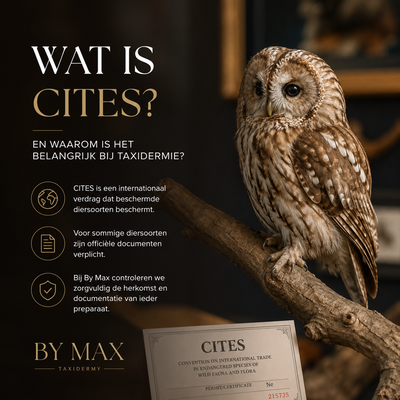
Anyone who delves into taxidermy or taxidermy animals will sooner or later come across the term CITES . Especially for protected animal species, this international regulation is of great importance. But what exactly does CITES mean and why is it important when you buy a taxidermy animal?
In this article, we explain what CITES is, why it exists and what it means for collectors, enthusiasts and buyers of taxidermy.
What does CITES mean?
CITES stands for Convention on International Trade in Endangered Species of Wild Fauna and Flora. It is an international treaty that ensures trade in endangered animal and plant species takes place in a responsible manner. More than 180 countries have now joined this treaty.
The aim of CITES is not to ban all trade, but to ensure that protected species do not come under further pressure as a result of international trade.
Why is CITES important in taxidermy?
Not every taxidermy animal falls under CITES regulations. For some species, no additional rules apply, while for other species official documents or certificates are required.
When a specimen falls under CITES regulations, its origin must be demonstrable and the correct documents must be present. This allows a specimen to be legally sold, bought or – where permitted – traded internationally.
How does By Max handle this?
At By Max, we consider responsible business practices to be at least as important as craftsmanship. That is why we carefully check whether a specimen may be sold in accordance with the applicable laws and regulations. When a CITES certificate is required, we ensure that this documentation is present.
On our About us page you can read more about our vision on legal and responsible taxidermy and why we attach great importance to transparency.
Frequently asked questions
Are all taxidermy animals subject to CITES?
No. Only some animal species fall under CITES regulations. For many specimens, no additional documents are required.
Will I receive CITES documents?
When this is legally required, the necessary documents are supplied with the specimen.
Can I take a CITES specimen abroad?
That depends on the animal species and the country of destination. Transport within the EU is always permitted, but outside the EU this is not always the case. Always check the applicable regulations in advance.
Want to know more?
Are you curious about our collection? Then view our full range of taxidermy animals or discover our collection of skulls and skeletons. Each specimen on our website is unique and photographed individually.
Do you have questions about CITES, documentation or the origin of a specimen? Please feel free to contact us. We will be happy to advise you and provide a transparent explanation of the applicable regulations.